







Moodtape: what is it, and why should you create one before your video shoot?
🎬 Quick summary | 🕓 Updated on 31 August 2026
🎯 Aim of this article: Starting a production without a shared artistic vision is the surest way to muddy your final message. This guide explains how a moodtape works to align creative teams and ensure the visual outcome lives up to your ambitions.
🧰 What you’ll learn:
- The basics: How to distinguish this dynamic format from the traditional static moodboard to inject rhythm into your vision.
- The method: The five key steps for selecting your clips and choosing a soundtrack capable of evoking the desired emotion.
- Coordination: The strategy for linking this video mock-up to your written brief to ensure your aesthetic choices are firmly established.
✅ Bonus: You’ll discover, amongst other things, why 36 per cent of companies rely on external expertise to structure their creative ideas before rolling the cameras.
👥 Who is it for?: This content is aimed at marketing directors, brand content project managers and communications managers who wish to master and elevate the standard of their pre-production phase.
You’ve got a brilliant idea for your next video. The concept is spinning round in your head and you can already picture the overall aesthetic. Yet, when you share this vision with your creative team, a disconnect quickly sets in.
Your words struggle to capture the essence of a complex atmosphere. You talk about a fast-paced rhythm, whilst your colleagues imagine a jerky production. You mention warm lighting, and they immediately think of a vintage filter. Faced with this situation, a simple meeting is rarely enough to clear up the misunderstandings.
This is where a proper visual preview becomes essential to get everyone on the same page. Getting everyone on the same page before the cameras start rolling guarantees tremendous efficiency on set. The aim is to transform an abstract idea into a tangible guide. This is precisely the role of the moodtape.
All the figures and statistics in this article are taken from our e-book on the results of the Corporate Video Barometer survey conducted in 2026.
Moodtape: definition and origins
This unique format has its roots directly in the demands of film studios. Originally, directors had to convince producers who were often wary of abstract concepts. The moodtape arose from this absolute necessity to bring an idea to life even before the first day of filming.
In practical terms, it is an ultra-condensed video mock-up. This piece brings together clips from existing works to establish a clear artistic direction. This dynamic collage allows you to sketch out the essence of your future project.
To structure this vision, a moodtape generally rests on three fundamental pillars:
- The editing rhythm: This conveys the video’s overall energy to capture attention
- The sound identity: This immediately sets the desired emotional tone
- The aesthetic choices: These define the colour palette and the composition of the shots
Today, this method has moved well beyond Hollywood to take the corporate world by storm. Marketing departments are embracing it to gain senior management’s approval for bold concepts. This format instantly dispels any doubts. It is a far more effective alternative to lengthy presentations, uniting all stakeholders around a clear creative vision.
Moodtape vs moodboard: what’s the difference?
There is often confusion between these two creative mediums. Yet their roles are radically different:
- A mood board captures the aesthetic: this static collage brings together photos, colours and textures to define the visual identity
- The moodtape drives the action: this dynamic format sets the pace and evokes emotion through the striking combination of visuals and soundtrack
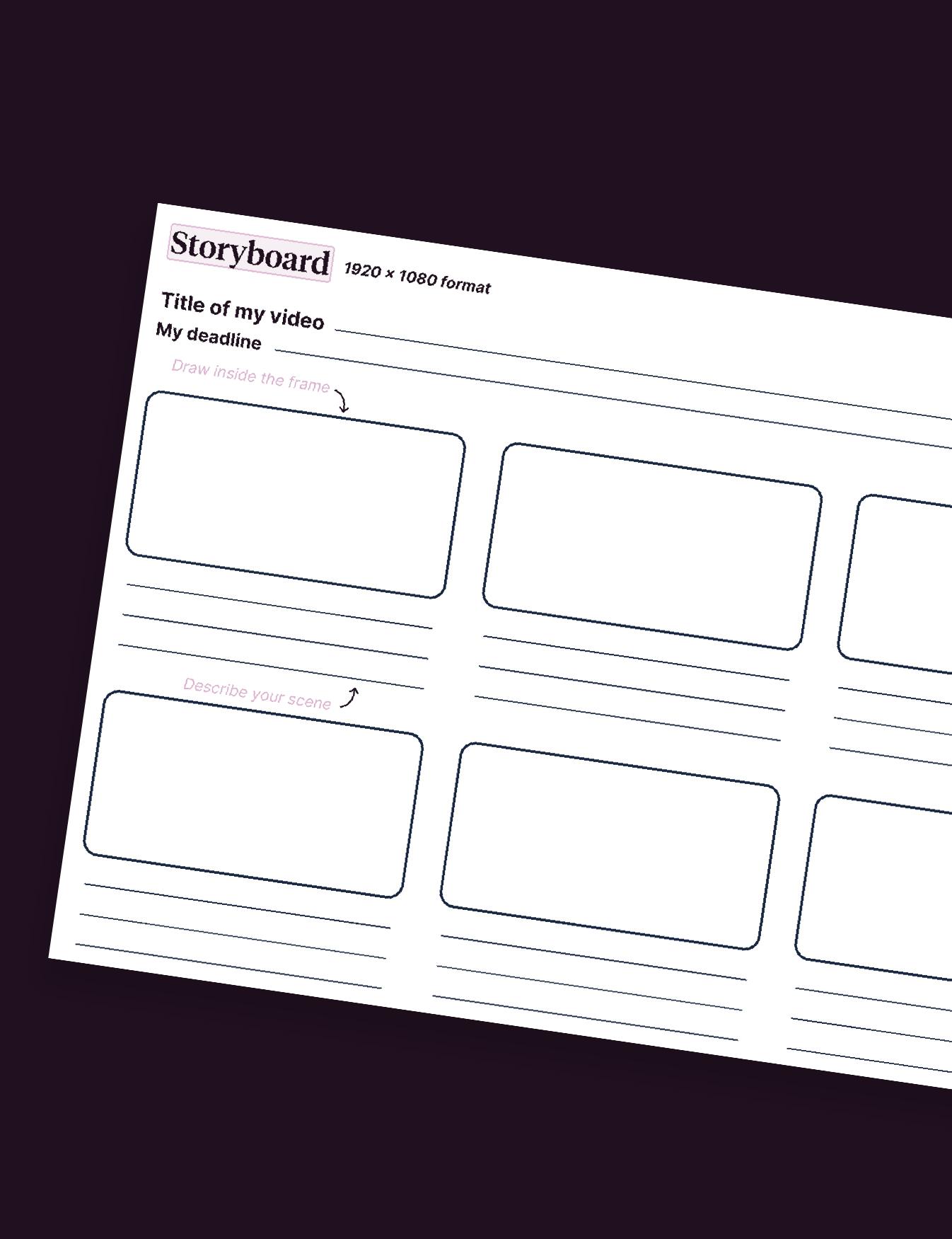
The traditional storyboard remains a valuable tool for establishing a visual foundation. However, it quickly reveals its limitations when it comes to illustrating a fast-paced transition or a complex soundscape. Audiovisual content requires a deeply immersive approach. Video editing then takes over, immersing your staff directly in the final atmosphere.
Structuring this vision is an essential step in preparing properly for your video shoot. An animated storyboard instantly clears up any misunderstandings. If this technical exercise is holding you back, the support of a savvy video agency will help bring your boldest ideas to life without any creative compromise.
Bear these two simple rules in mind to guide your approach:
- Use the static format to approve an overall artistic direction
- Insist on a dynamic format to set the pace and ensure an emotional impact
Why create a mood tape before a video shoot?
Starting to film without any visual preparation is the surest way to miss your mark. This dynamic storyboard is a crucial step for two key reasons.
Uniting teams around a shared vision
The marketing team has a brilliant idea. Management approves a completely different concept. The creative team, for their part, goes down a third route. It’s a classic scenario in launch meetings.
To avoid this fiasco, the moodtape acts as a true universal translator. It replaces lengthy, vague descriptions with indisputable visual evidence. Everyone looks at the same screen and agrees on the same creative intent. Misunderstandings disappear instantly.
Securing script-based formats
Whilst authenticity is key, with 68 per cent of companies relying on employee videos and 62 per cent on testimonials, more complex formats require meticulous artistic direction. The moodtape then becomes your only safety net for keeping these ambitious projects on track:
- It lays the narrative foundations for scripted videos, a format chosen by 22 per cent of brands
- It injects the fast-paced energy essential for a successful teaser, used in 21 per cent of cases
- He checks that the colour matching is accurate before committing to the production budget
- He finalises the musical choices to ensure an emotional impact from the very first second
The 5 steps to creating an effective mood tape
Turning an abstract idea into a concrete visual representation requires a certain degree of methodological rigour. Here are the steps to follow to bring your vision to life with precision and avoid losing focus along the way.
1. Define the intention
Before you start looking for any images, it is crucial to establish the framework for your project. This initial thinking will guide your entire artistic direction and save you valuable time. Take a moment to identify the emotion you really want to evoke in your audience. Then determine the key message that absolutely must stand out from the rest to make a lasting impression. A clear guiding principle will prevent your montage from looking like a mere catalogue of disjointed inspirations.
2. Sourcing images
It’s time to go on a hunt for visuals to bring your concept to life. Don’t hesitate to delve into the vast libraries of stock image sites to unearth some real gems. Also, watch your favourite films closely to draw inspiration for framing or lighting. You could even analyse the most striking adverts in your sector. The aim is to capture images that perfectly capture the desired atmosphere, so you can build a solid foundation.
3. Choose the soundtrack
Music is never simply added at the last minute as mere background filler. It forms the very backbone of your project and sets the overall mood. The tempo you choose will directly influence the speed of your transitions, ensuring an immediate impact on the viewer. A well-chosen soundtrack instantly brings depth to sequences that might otherwise seem dull at first glance.
4. Assemble the model
Now it’s time for the rough cut of your footage. This is a full-scale test to ensure your images and sound blend seamlessly. On the editing desk, get straight to the heart of the matter by trimming the videos to keep only the most powerful scenes. Then place your key sequences on the main track to create a logical narrative flow.
If you’re unsure about this technical process, entrusting this stage to a video production company ensures a high-impact result without wasting time.
5. Refine the rhythm
It is ultimately the finishing touch that will make all the difference to your presentation. This involves meticulously synchronising your images with the beat of the music to create visual and auditory harmony. A cut precisely timed to a heavy percussion beat adds tremendous dynamism to the whole presentation. This attention to detail truly brings your presentation to life and keeps your team captivated from the very first to the very last second.
What a good moodtape should contain
Creative ambition demands real rigour. The visual composition is meticulously planned in advance to immerse your staff in the heart of the project. The aim is to create a genuine ‘wow’ effect through these key elements:
- A distinct musical identity: the audio track sets the overall mood
- The catchy melody: the emotion hits you right from the very first seconds
- A bold use of colour: a striking choice immediately sets the mood
- Carefully designed lighting: it is through this that high-end aesthetics come to the fore
- Shot values: precise visual cues guide the cameraman
- Incorporating close-ups: the perfect way to highlight a key detail
- Including wide shots: the ideal way to set the scene
Moodtape and creative brief: how do you link them together?
The combination of words and images creates the perfect blend for your audiovisual project. Text and video are by no means at odds with one another. On the contrary, the integration of these two media guarantees the complete success of your creative process.
The division of roles is organised with great precision:
- The written brief sets out the rationale behind the project, clearly defining the technical constraints and objectives
- The video moodtape sets the overall artistic vision to instantly evoke the emotion the brand is seeking
The way these tools complement one another helps to avoid a lot of last-minute panic on set. However, this meticulous alignment between the written script and the visuals remains a delicate task.
Statistics show that 36 per cent of companies choose to draw on external expertise. This may take the form of a collaborative partnership or a complete handover. Bringing in specialists helps to effectively safeguard every stage of your video production. The aim is to ensure perfect synergy between your written guidelines and your aesthetic vision.
Examples of successful mood tapes for corporate videos
Theory always becomes clearer when confronted with the reality on the ground. Analysing practical case studies demonstrates the power of this visual tool before filming begins.
The product launch
The launch of a new product on the market calls for a memorable presentation. The montage of dynamic clips sets a fast-paced rhythm even before the first take. The teams immediately visualise the energy needed to captivate prospective buyers.
The employer branding video
Attracting the best talent requires a warm and genuine approach. The mock-up strikes just the right note to reflect the real atmosphere of your offices. Candidates get a feel for the company’s spirit through carefully selected scenes.
Internal communication
Bringing your teams together requires a unifying corporate message. The preliminary edit sets a very human tone. This enables your staff to fully identify with the organisation’s values.
Developing these visual worlds requires a keen eye. Our agency, Pitchy Studio, puts its twelve years of experience at your service to give structure to your creative ideas. The experts in our team handle the motion design, visual effects and sound design for your ambitious projects.
Your art direction benefits from first-class support to ensure a flawless final result, whilst Pitchy’s technological ecosystem offers you the flexibility needed to produce impactful videos on a daily basis.
Editor’s note
For a long time, I believed that a highly detailed brief was enough to set the parameters for a video project. Reality soon proved me wrong. Terms such as ‘rhythmic’ or ‘modern’ are interpreted differently by everyone. Disagreements can therefore arise very quickly.
Discovering the moodtape was a real eye-opener. This visual tool instantly gets everyone on the same page. The sound and images create a tangible atmosphere right from the start. Quick approval finally replaces endless meetings.
My current conclusion is clear-cut. The energy spent trying to describe a visual emotion is often wasted. Demonstrating through images remains the foolproof solution. This method is a complete game-changer, allowing you to approach your production with absolute peace of mind.
Bringing your boldest ideas to life often requires dedicated guidance. Your next project deserves impeccable artistic direction to leave a lasting impression on your audience. The pre-production stage becomes a breeze with the right partner.
Contact Pitchy Studio now, the premium video production agency.
What is the ideal length for a moodtape?
A concise format is the golden rule for this stylistic exercise. Your colleagues’ attention wanes quickly during a presentation. The ideal duration is generally between thirty seconds and one minute. This short span of time is more than enough to create a compelling atmosphere. The challenge lies in sparking interest without ever revealing the full details of the future project.
Who uses moodtapes?
Production agencies use this medium on a daily basis to win over their clients. Marketing departments also make use of it to ensure the successful launch of a campaign. Filmmakers find it an ideal medium through which to express their artistic vision. The use of this dynamic mock-up now appeals to the majority of decision-makers in the B2B sector.

Associated resources

In theory, corporate communication includes all communication actions that aim to build the good reputation of a company in the future, towards its ecosystem, through different opportunities. But that was before: today, corporate video is becoming a popular format for thwarting fake news, gaining the trust of audiences and building digital brand awareness. Check this blog article.

Why not use an online video editor for your corporate video creation? With a simple interface, you'll be able to handle it quickly.

Whatever your company's CSR initiative, a video interview with your employees will be a formidable weapon. We explain why.