














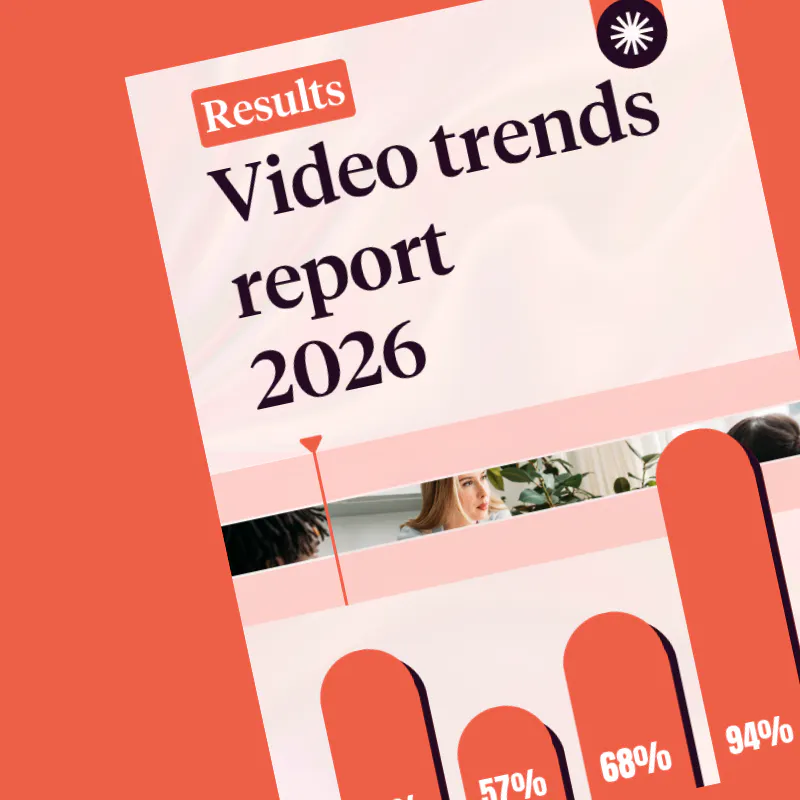

Video trends report 2026: 250+ companies respond, 40+ stats to remember (Pitchy report)

🎬 Quick summary | 🕓 Last updated: 07/30/2026
🎯 Goal of this article: Explore the video trends report for businesses based on the findings of Pitchy's corporate video report. Discover how companies use video today, how much they invest in video projects each year, which formats and platforms to prioritize depending on job roles, and the role artificial intelligence plays in corporate video production.
🧰 What you will learn:
- The key figures on corporate video usage in 2026
- The most-used and best-performing video formats
- Which platforms to prioritize based on your communication goals
- The impact of artificial intelligence on video creation and production
- Why some companies remain cautious about adopting AI
✅ Bonus: Access over 40 exclusive key statistics, detailed charts, and survey responses from 250+ companies across multiple industries and job functions.
👥 Who is this for?: Marketing teams, internal and external communications managers, video project leads, HR and training teams, digital transformation managers, executives, and any company looking to build a more effective video strategy based on real data and market trends.
Video has evolved from a communication tool into a strategic asset that can deliver significant business value.
Once considered a format reserved for major communication campaigns, video has now become an essential business tool. In 2026, according to our video trends report, 85% of large enterprises, mid-sized companies, and SMEs say they produce video content across different industries and business functions, including communications, marketing, HR, training, and internal communications.
Today, video supports a wide range of business activities across organizations. However, behind this widespread adoption lie many different realities.
- What budgets do organizations actually allocate to video production?
- Which use cases are most common today?
- How frequently do companies produce video content?
- What results do they actually see?
- How is AI transforming video production?
To answer these questions, Pitchy, a leader in democratizing video, surveyed 250+ professionals from different sectors and roles to map out the state of the video market. Based on more than 40 key statistics, our video trends report shows how companies are using video in 2026.
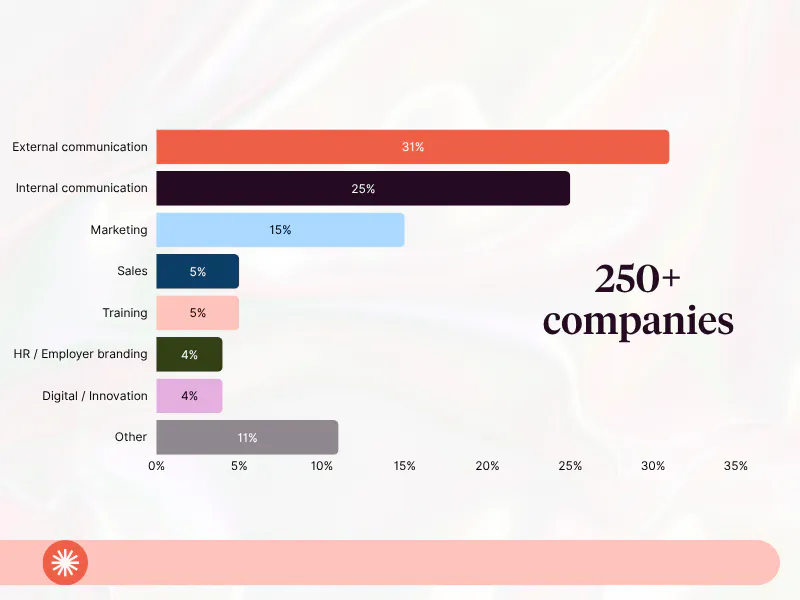
What does our 2026 video trends report reveal about corporate video strategy?
The question is no longer whether companies should use video as part of their strategy. The data speaks for itself: 87% of B2B companies and 82% of B2C companies produce video content.
But adoption is only the beginning. Our video trends report goes further, exploring the use cases companies prioritize, the budgets they allocate, and how video practices are evolving with artificial intelligence.
Is video adoption growing across all types of organizations?
According to our video trends report, mid-sized companies represent the largest share of video production, ahead of small and medium-sized enterprises and large enterprises:
- Mid-sized companies: 53%
- Small and medium-sized enterprises: 26%
- Large enterprises: 21%
These results highlight a key reality: video production is no longer limited by company size or budget. The accessibility of video creation tools, the expansion of digital platforms, and the integration of AI into solutions like Pitchy have made video easier to produce than ever.
Pitchy’s customers reflect this trend as well. Major organizations such as La Poste Groupe, France Travail, and Groupement Les Mousquetaires all produce video content, but at different frequencies: some publish a few videos per year, while others create new content every week.
How often do companies create video content in 2026?
Having a video strategy is a good first step, but maintaining a consistent production schedule is what makes the difference.
That’s exactly what our video trends report reveals: video is no longer just about recording, editing, and publishing content. It has become an ongoing practice, with companies producing content at different frequencies:
- 27% produce video content weekly
- 42% produce video content monthly
- 31% produce video content a few times a year
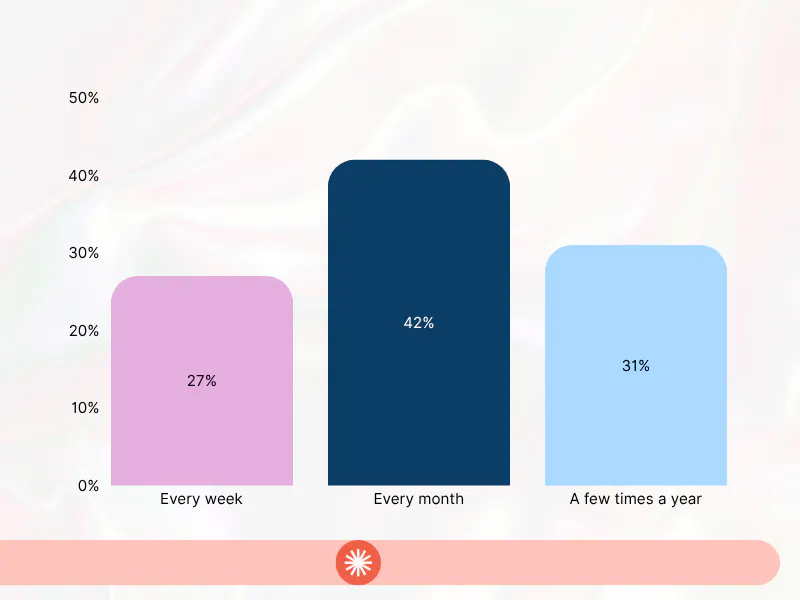
These figures show a clear change: video has moved from being an occasional, high-effort project to becoming a regular communication format. What’s even more striking is how consistent this trend is across markets: 58% of B2B companies and 60% of B2C companies report producing video content at least once a month.
Is corporate video becoming a strategic investment for businesses?
Production frequency is one of the key indicators of video maturity. However, it only shows part of the picture. To truly understand video budgets, we need to look at investment levels: how much are organizations ready to spend on creating video content?
Do you need a large budget to build an effective video strategy?
It’s a common belief that creating videos requires a large budget. But that’s not true. Many organizations achieve strong results with a limited budget:
- 20% of B2C and 27% of B2B companies spend less than €5,000 on video production
- 7% of B2C and 10% of B2B companies invest between €5,000 and €10,000
- Only 2%, in both B2C and B2B, spend more than €100,000 per year on video
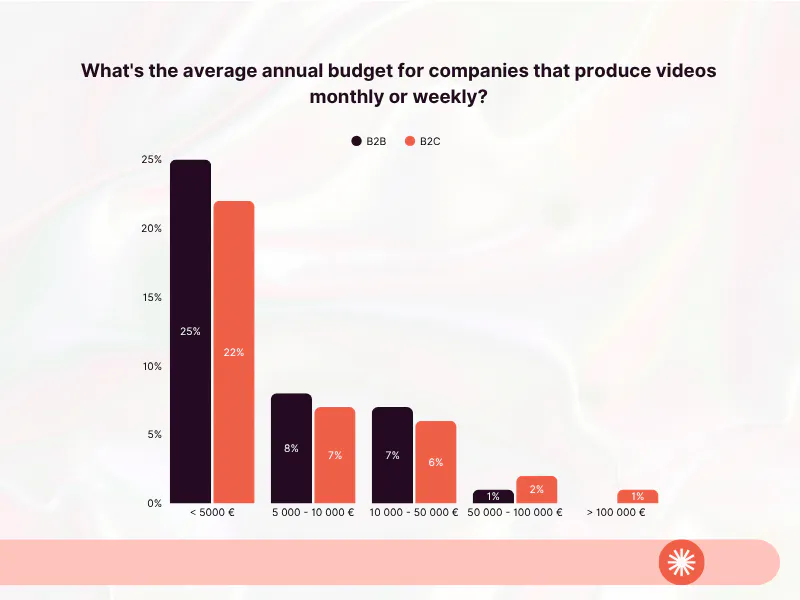
According to our video trends report, most companies produce videos with relatively small budgets, far from the high costs often associated with agency projects. And this is where the findings become interesting: many organizations achieve effective video results without requiring a large budget.
Among companies using video software with a budget of less than €10,000, 85% say their videos are effective for their department:
- 89% of B2C companies
- 81% of B2B companies
A video’s success is not defined by the size of its budget, but by the strategy behind it, the quality of its distribution, and the expertise involved in creating professional corporate videos.
The findings from our video trends report show that impactful video content is no longer reserved for companies with large budgets. Video creation platforms like Pitchy are designed to help organizations create professional videos without relying on an agency or a dedicated technical team.
Software vs agencies: which approach is shaping corporate video in 2026?
More than 250 companies participated in this survey, including Pitchy customers. Among the respondents using video software, 93% say it delivers concrete results for their department. The remaining 7% say they have not used the solution enough yet to measure its effectiveness. Others continue to rely on a more comprehensive approach that combines software with additional video production support.
- 62% of companies use video software exclusively
- 31% combine software with an audiovisual production company
- 5% rely only on a video production agency
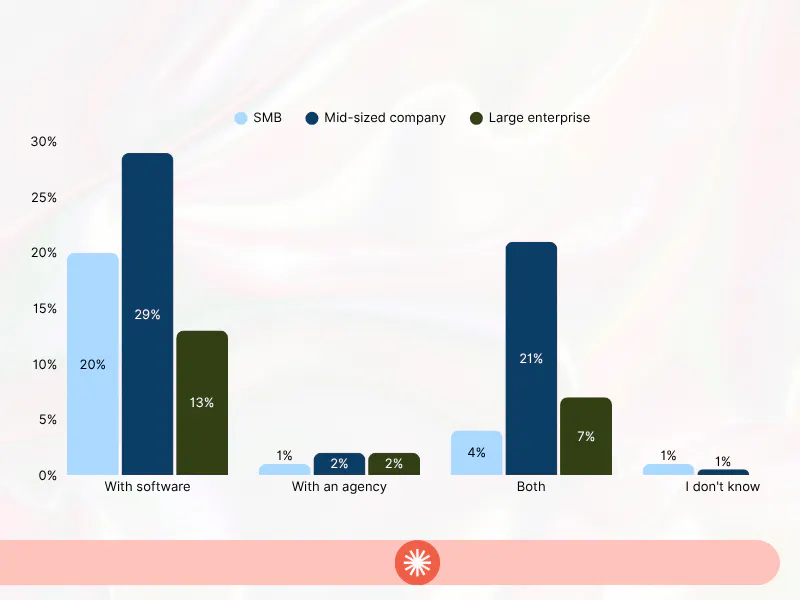
Based on these insights, Pitchy has developed a complete range of solutions designed to meet the different needs of video creators and marketing teams:
- Pitchy Studio: an intelligent video agency for projects requiring tailored support.
- Pitchy Solutions: AI-powered video software featuring more than 800 sequences created by our Motion Designers, designed to support everyday video production needs.
- Pitchy Max: a complete solution for Pitchy Solutions users who want to go further with advanced services, including 2D and 3D motion design and other creative formats.
However, software alone is not enough. A successful video strategy depends on three key elements:
- A solid strategy guided by experts
- The right tools to produce professional-quality content in-house
- A distribution strategy aligned with your goals
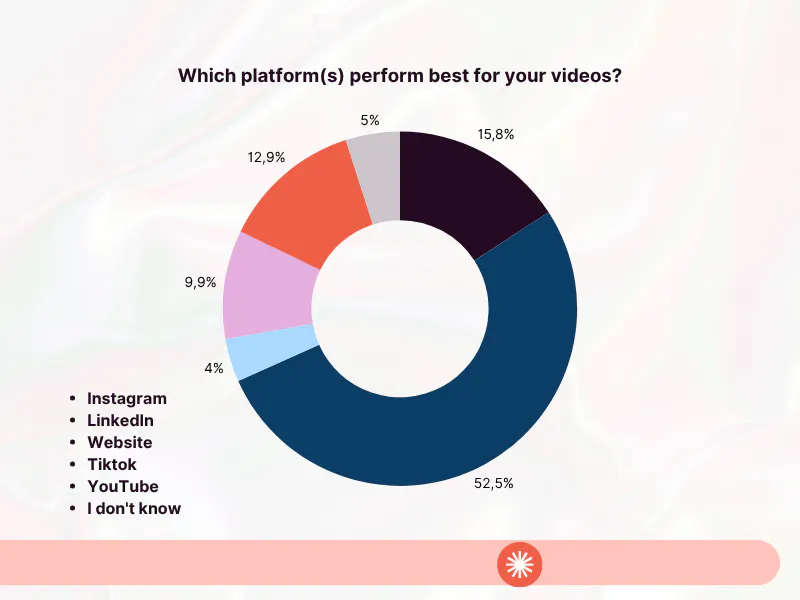
Which platforms do external communications experts use for the video content?
External communications experts carefully choose the platforms that best reach their audiences. They monitor user behavior and understand which channels are most effective for their communication goals.
- LinkedIn: the leading platform for professionals, considered effective by 71% of B2B companies compared with 29% of B2C companies
- YouTube: another high-performing platform, recognized by 75% of B2B companies compared with 25% of B2C companies
- Instagram: the preferred platform among B2C companies, with 80% considering it effective compared with 20% of B2B companies
- TikTok: also used to reach wider audiences, with 75% of B2C companies compared with 25% of B2B companies
There is no one-size-fits-all platform. The right choice depends on your goals, your audience, and the type of content you want to create
What are the main video use cases and production frequencies in internal communications?
While external communications teams have already adopted video widely, internal communications teams are following the same trend. HR, training, and internal communications teams have also recognized the power of video to deliver messages more effectively to employees.
- HR teams are naturally embracing video for needs such as internal announcements, employer branding, and employee benefit presentations
- Leadership communication is also increasingly using video, giving executives and managers a more direct way to connect with their teams
- Training is another key area where video is becoming a powerful learning tool, followed by onboarding, which helps welcome and support new employees
Most companies that have adopted video use it at different frequencies and production levels:
- Some produce videos occasionally, depending on specific needs
- Many create video content on a regular basis
- A smaller number only produce videos for major events or specific occasions
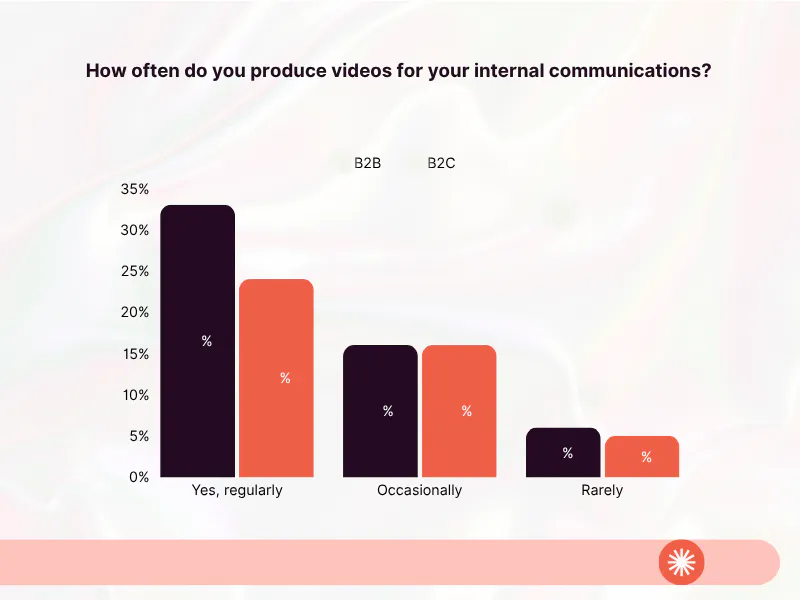
According to this video trends report, B2B companies tend to produce video content slightly more frequently than B2C companies, with a gap of nearly 10 percentage points.
As AI advances, video production practices are changing across industries. Video editing platforms and software, such as Pitchy, are increasingly integrating AI-powered features. Other solutions are going even further by generating videos almost entirely from a simple prompt.
Is AI transforming the future of corporate video?
As AI continues to evolve, companies are asking an important question: how will these technologies change the way videos are created? Will generative AI transform video production workflows, or challenge the role of humans in the creative process?
Are professionals ready to embrace AI in their video production workflows?
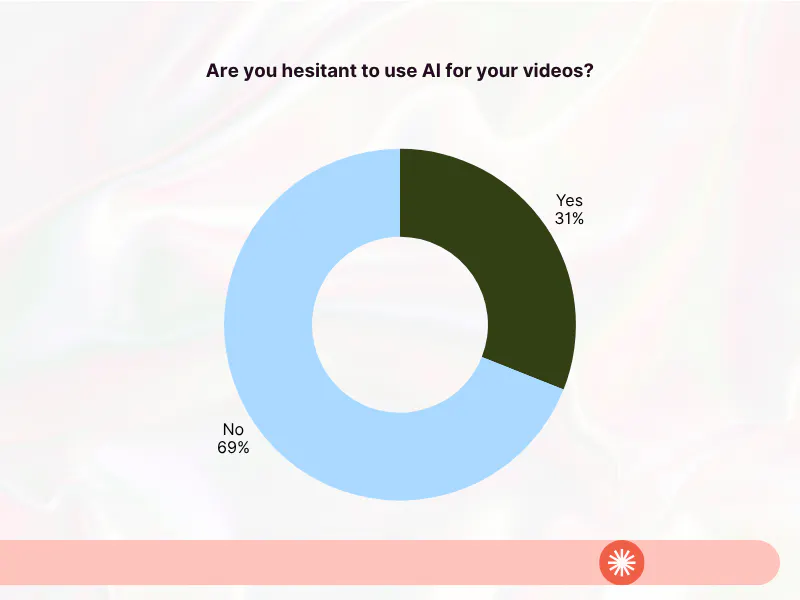
AI is gradually becoming part of corporate video workflows, but adoption is still growing. While some companies are already using these technologies, others remain cautious:
- 31% of companies are still hesitant about using AI
- 69% of professionals have no specific concerns about adopting AI
- Some companies have already started integrating AI into their video production processes, with different levels of adoption
The benefits are clear: integrating AI into a video strategy helps companies create more content, save time, and improve production efficiency.
Why are more companies turning to AI-powered video production?
AI is becoming a practical tool for solving real business challenges, from saving time to reducing production costs. Today, companies use AI for:
- 61%, writing video scripts
- 51%, automatically generating subtitles
- 30%, translating videos into multiple languages
- 29%, adding voiceovers
- 22%, creating videos from start to finish
- 20%, editing videos
- 13%, creating avatars
Companies do not all use AI for the same reasons. Their main motivations include:
- 88% use AI to save time
- 49% use it to explore and experiment with what these tools can offer
- 33% use it to test new video formats
- 29% want to reduce production costs
- 33% aim to improve video quality
- 22% want to produce more video content
- 14% want to make video creation more accessible
AI does not replace human creativity. Behind every AI-powered video, there is still a person defining the creative direction, writing prompts, reviewing the content, and ensuring the final result meets expectations. This collaboration between humans and AI will likely play a major role in the future of corporate video production.
Conclusion
The 2026 video trends report shows that video has taken on a new role within companies. It is no longer just one format among many, limited to communication or advertising: Video has become a key communication channel for organizations, supporting internal communication, customer acquisition, employer branding, and many other business needs.
The results from this corporate video study highlight the scale of this shift: adoption is widespread, use cases continue to expand, and companies are achieving strong results even with limited budgets. Video works, and the numbers clearly demonstrate its impact.
Keeping up with this trend is no longer just about creating more videos. The most advanced companies are now able to measure their impact, integrate AI into their workflows, maintain their authenticity, and build a complete video strategy from production to performance measurement and business outcomes.
Video is no longer just a communication tool. It helps companies convince audiences, engage communities, and build long-term relationships. Explore the Pitchy video trends report to discover the full results and insights from our survey.
How is video performing in Businesses?
Our video trends report shows that among companies using video software with a budget under €10,000, 85% consider their videos effective proving that impact depends more on strategy than on budget size.
How often do companies produce videos in 2026?
Companies are producing videos more frequently than ever: 59% of companies produce videos at least once a month.
Do you need a large budget for an effective video strategy?
No. The success of your video strategy depends more on the strategy itself and the tools you use. Explore Pitchy's offers to choose the right solution.
How can Pitchy help companies create videos faster?
Pitchy offers AI-powered solutions to support companies with their regular video production needs. All teams can create videos, including interviews, e-learning content, and infographics, independently without requiring technical skills.
Video software vs agency: which option should you choose in 2026?
It all depends on your needs. Some companies use only software, while others combine software with agency support for more complex projects. Pitchy meets both needs with Pitchy Solutions and Pitchy Studio.
Which platforms perform best for video trends?
LinkedIn stands out as the leading platform, particularly favored by B2B companies. YouTube follows, while Instagram and TikTok remain the preferred platforms for B2C companies looking to create short-form content.
What is the difference between Pitchy solutions and Pitchy Studio?
Pitchy solutions is an AI-powered video creation software designed to meet everyday video production needs independently. Pitchy Studio is the smart video agency, designed to support projects requiring tailored guidance and deeper expertise.

Ressources