








What video equipment should you choose for professional corporate filming?
🎬 Quick summary | 🕓 Updated on 31 August 2026
🎯 Aim of this article: trying your hand at videography with the wrong equipment is the best way to undermine your image. This guide breaks down the essential technical choices for putting together a high-performance filming kit and ensuring your audiovisual projects look top-notch.
🧰 What you’ll learn:
The hardware setup: How to balance the flexibility of a smartphone with the power of a hybrid camera to make every shot look its best.
Mastering the environment: The golden rules for controlling your LED lighting and capturing crystal-clear sound without any background noise.
Budget optimisation: How to invest wisely in the right production accessories and get the most out of your equipment over the long term.
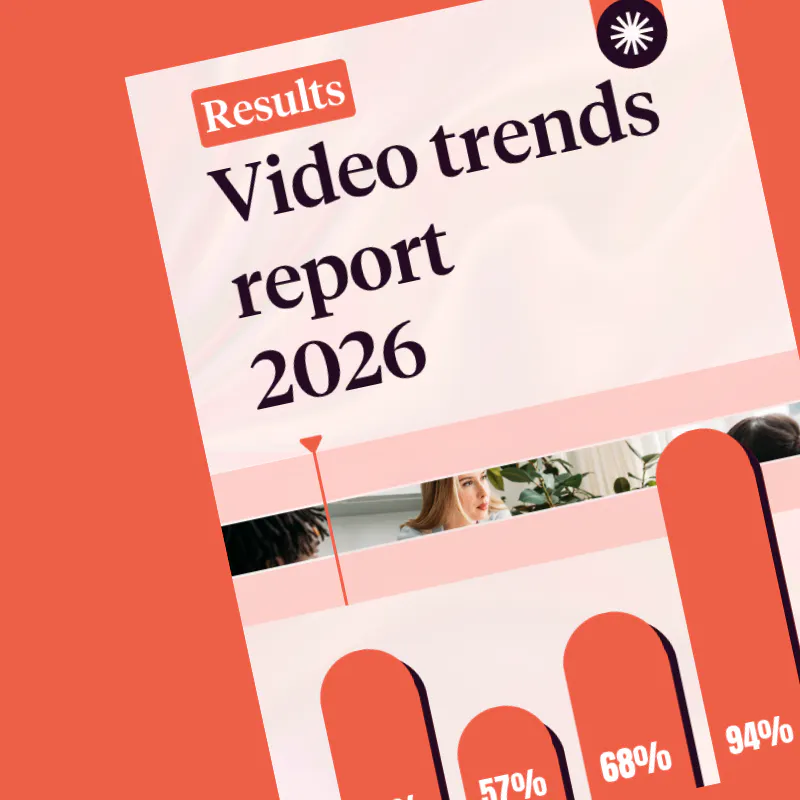
✅ Bonus: Exclusive insights from our 2026 Barometer. You’ll discover, in particular, that 68 per cent of companies believe it’s more effective to produce more videos on a smaller budget. This confirms the importance of equipping yourself strategically.
👥 Who is it for? : This content is aimed at decision-makers, marketing directors and communications managers who wish to structure and raise the standard of their video production.
Simply scrolling through a few rough images on a screen is no longer enough to hold people’s attention. Poor framing will put your audience off, whilst poor sound quality will instantly undermine the impact of your message.
Conversely, a carefully crafted production conveys a reassuring sense of professionalism. This level of visual rigour becomes vital when you consider that 69 per cent of businesses produce videos at least once a month, or even every week. Maintaining such a pace without compromising on aesthetics requires careful technical planning.
Choosing your video equipment is the starting point for this strategy. Trying your hand at filmmaking with unsuitable equipment is far too risky a gamble for your brand image.
Rest assured, there’s no need to break the bank to buy the most expensive camera on the market. The key is simply to put together an audiovisual kit that’s perfectly tailored to your projects.
All the figures and statistics in this article are taken from our e-book on the results of the Corporate Video Barometer survey conducted in 2026.
Why does video equipment really make all the difference?
Your audience is very unforgiving when it comes to improvisation. The visual quality of your content acts as a direct reflection of your professionalism. A dull image undermines even the most brilliant speech, but conversely, a crisp, clear image captures attention. It immediately reinforces your credibility.
The figures more than justify this requirement. Today, 83 per cent of businesses regard video as an effective tool for their operations. Maintaining such a high level of effectiveness requires a flawless technical foundation.
Good equipment is therefore crucial to maintaining this level of performance in the long term. A communicator’s talent counts for a great deal. However, the message takes on a whole new dimension when the technology keeps pace.
In practical terms, a careful selection of your equipment ensures several crucial aspects:
- Image clarity to build the viewer’s trust
- Crystal-clear sound, essential for holding the audience’s attention
- Lighting management to showcase the speaker without any unnecessary artifice
The right equipment does not replace a strong idea. It simply serves to enhance your message. This is the secret to a successful video production, where the technology takes a back seat to serve your strategy exclusively.
Camera, smartphone or camcorder: which is the best choice for a business?
The audiovisual market offers a wide range of tools. Each device has its own area of expertise. You should therefore choose equipment that matches your ambitions.
The versatility of the smartphone for quick content
Mobile phones excel at capturing spontaneous moments. This ultra-compact device can be whipped out in a flash to capture a moment on the spot. Its connectivity makes it easy to share short-form content immediately. However, this agility comes with technical limitations. A smartphone’s sensor is minuscule compared to a proper camera, meaning image quality deteriorates sharply when light is scarce.
The power of dedicated cameras and camcorders
People are at the heart of your visual strategy. In fact, 68 per cent of businesses believe that videos featuring staff generate the most engagement. Testimonials follow this strong trend, with 62 per cent approval.
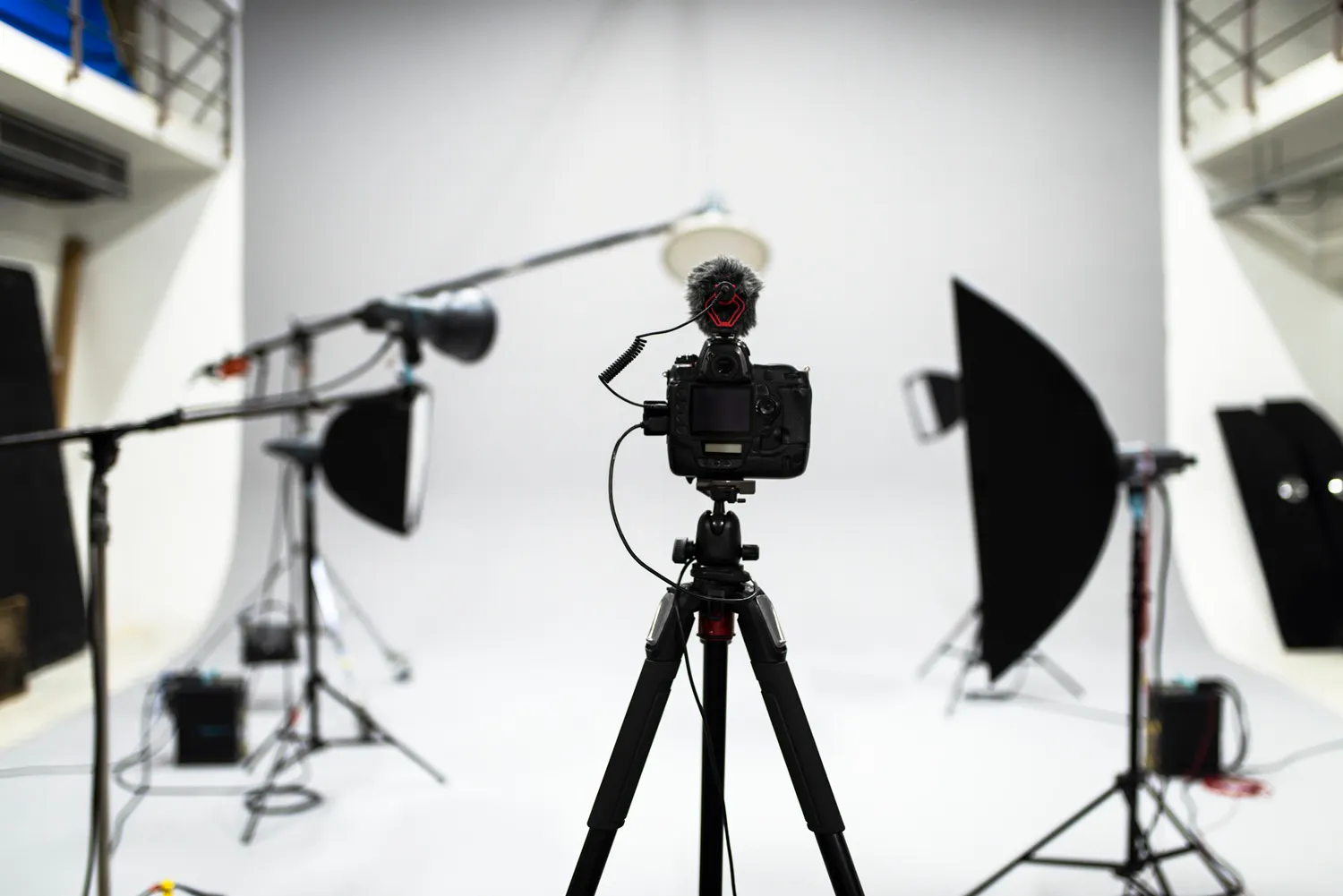
Showcasing these faces requires suitable audiovisual equipment. Investing in a hybrid camera (such as a Sony or a Canon) offers real added value:
- An aesthetically pleasing background blur to perfectly isolate the speaker
- A very natural rendering of different skin tones
- A sharp image even in challenging filming conditions
Video lighting: the often-overlooked factor
State-of-the-art equipment won’t work miracles in dim light. Lighting is the real secret to a captivating image. In fact, skilfully controlled lighting can enhance the footage captured by even a very standard camera. Conversely, even the most expensive sensor on the market will produce a mediocre result if your subject remains shrouded in shadow.
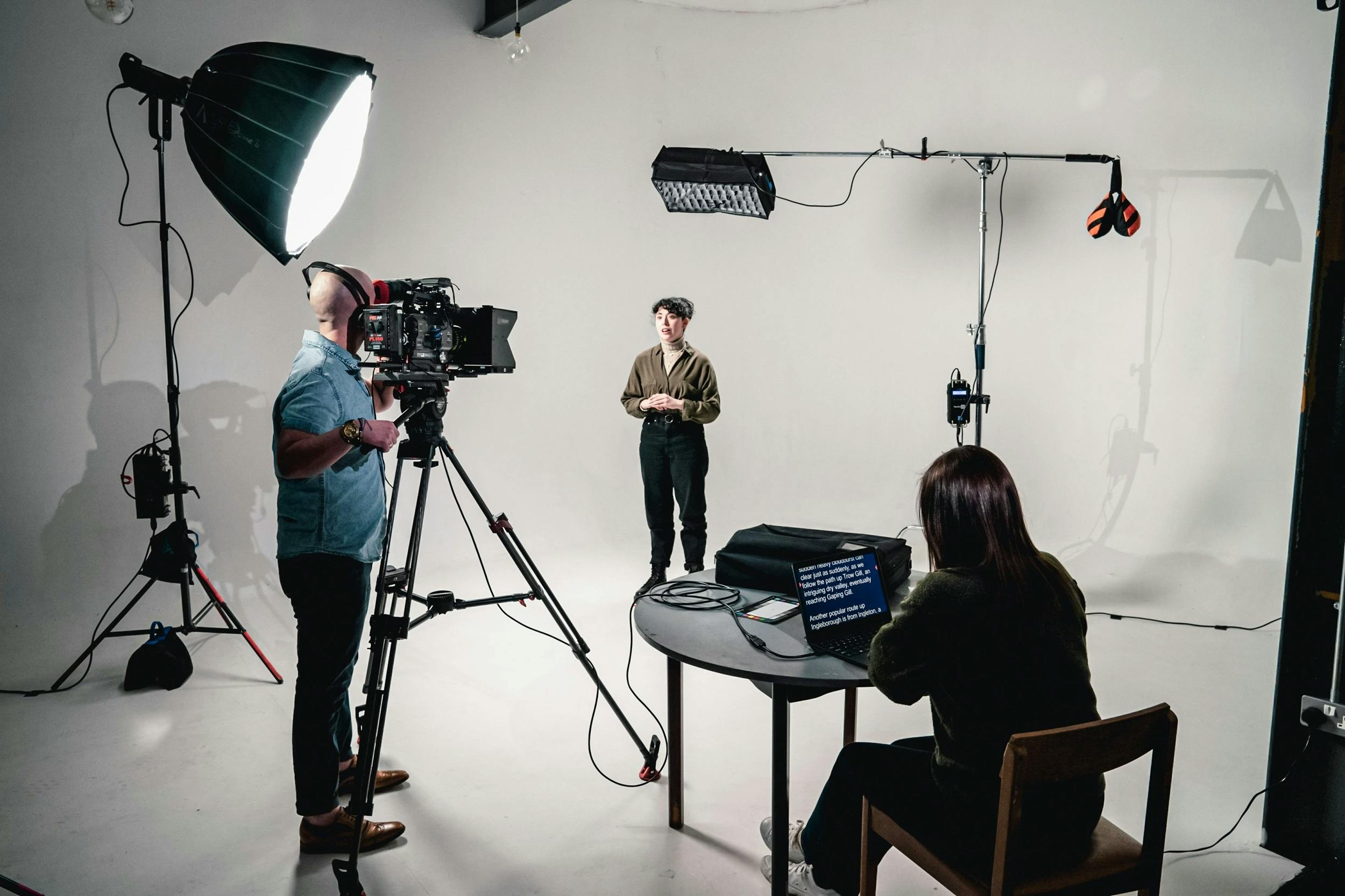
It is no longer necessary to set up heavy projectors to achieve a high-quality result, as technology has completely transformed the landscape for corporate filming. You can now rely on highly affordable LED panels. This compact lighting equipment casts a soft glow. It ensures a consistent look that flatters your speakers’ features. What’s more, these accessories can be set up in any meeting room in a matter of minutes.
However, positioning your light sources effectively does require a bit of know-how. Feel free to consult our best practices for lighting your professional shoots. The visual quality of your future interviews will immediately take a significant leap forward.
Sound recording: the other major priority during filming
The audience may sometimes overlook a less-than-perfect picture, but it will never tolerate poor sound quality. A persistent echo or crackling sound instantly ruins the viewing experience. Audio recording therefore requires the utmost attention. Anticipating this technical requirement is, in fact, one of the seven key steps in preparing properly for a video shoot.
Lavalier microphones for freedom of movement
Filming a speaker requires flexibility. The lapel microphone is ideal for this purpose. This small, discreet piece of equipment is attached close to the face. It ensures optimal voice capture whilst allowing the speaker complete freedom of movement.
This wireless system has some significant advantages:
- It makes it easier to move around dynamically on a flat surface
- It isolates the voice in slightly noisy environments
- It produces a warm sound thanks to its close proximity to the mouth
Cardioid microphones and high-quality audio
Some productions require a more cinematic approach. In such cases, the shotgun microphone becomes the go-to choice. This directional microphone records sound with remarkable precision. It focuses on the main voice whilst rejecting ambient noise from the sides. It is usually mounted above the camera. The use of an XLR connection ensures lossless signal transmission. When paired with a dedicated recorder, this device offers unrivalled acoustic richness for your most ambitious projects.
Stabilisation and essential accessories
A shaky image instantly ruins all your production efforts. The human eye cannot tolerate this constant wobbling. Stabilisation is therefore an essential step to avoid making your audience feel seasick.
Using a sturdy tripod ensures a perfectly steady frame for capturing a speech. If you’d rather film whilst walking, a motorised stabiliser will follow your movements with absolute fluidity.
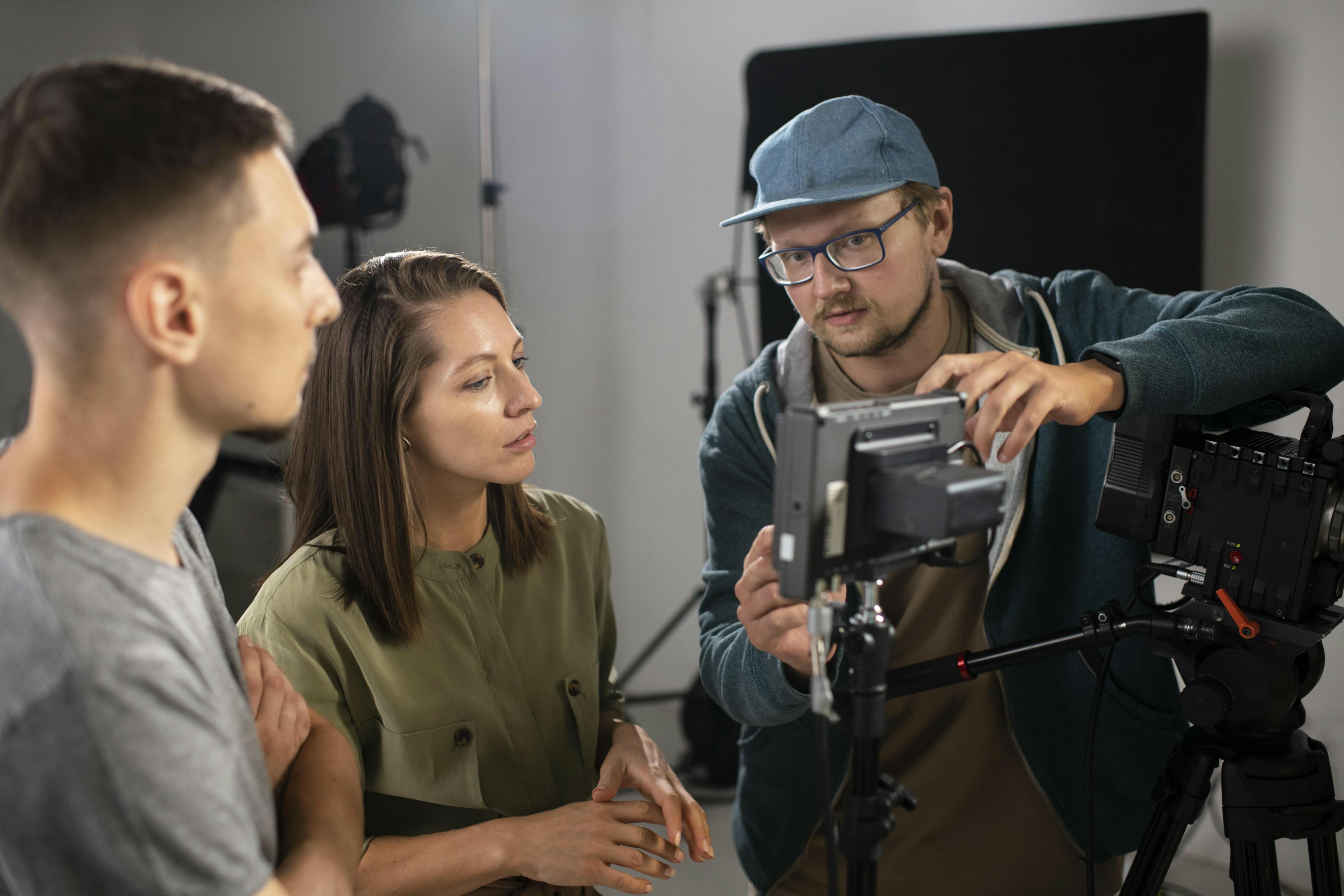
The technique also requires flawless planning. Even the best camera becomes completely useless if it switches off in the middle of a take. Minor equipment oversights often prove very costly on set. To ensure your shoot goes smoothly, your camera bag must contain several essential items:
A set of fully charged spare batteries
A backup memory card with a high write speed
An external hard drive to quickly transfer your large files
Additional extension leads and power cables to cover for any power cuts
A microfibre cloth to dust your lens before you start recording
Managing these logistics requires a great deal of rigour. Sometimes, delegating this mental burden is the most strategic choice. Drawing on the expertise of a smart video agency allows you to outsource all this complex technical set-up. You can then focus exclusively on the authenticity of your message.
How much should you budget for your corporate video equipment?
Financial considerations often put a damper on creative enthusiasm. However, getting the right equipment doesn’t have to mean astronomical expenditure. Many companies choose to hire overpriced cameras for every new project, but this ad hoc approach places a heavy strain on finances. Above all, this logistical constraint drastically limits your ability to communicate regularly.
However, frequency of publication is key. In fact, 68 per cent of companies believe it is more effective to produce more videos on a smaller budget. This perspective fully justifies purchasing your own video equipment. Owning in-house equipment becomes incredibly cost-effective in the long run. Your staff then have a ready-to-use kit at their disposal. They can carry out one shoot after another without having to keep an eye on the clock.
To get the most out of your investment, focus specifically on the following:
- A reliable hybrid housing to ensure a flawless image
- A dedicated audio solution to perfectly isolate the voice
- A portable lighting kit to ensure the lighting is always flattering
This pragmatic strategy brings down the unit cost of each project. Your audiovisual equipment then becomes a real driver of profitability.
Video production vs an agency: when should you outsource rather than invest?
The decision between purchasing equipment and outsourcing requires careful consideration. Before you reach for your chequebook, it is essential to analyse your situation. This assessment is based on several key criteria:
- The annual volume of your audiovisual productions
- The availability of your in-house teams to manage the technical aspects
- The narrative complexity of your future project
Purchasing equipment is an excellent choice for producing recurring content in-house. However, outsourcing becomes the best option when faced with a highly ambitious project. Market trends, in fact, show a strong move towards a hybrid approach. Currently, 62 per cent of companies rely solely on software for production. At the same time, 31 per cent of organisations combine the use of software with the expertise of an agency.
It is precisely in this area that Pitchy Studio stands out. Our team does not simply set up a camera on your premises. It combines twelve years of creative expertise with unrivalled technological prowess. This combination guarantees bespoke content designed to captivate your audience.
This exclusive model enables us to deliver premium-quality results whilst significantly reducing your production costs compared to a traditional set-up.
The editor’s view
To be completely honest with you, I all too often see decision-makers rushing headlong towards the most expensive equipment. It’s a natural instinct. We tell ourselves that a ten-thousand-euro camera will do the job for us.
However, the reality on the ground is quite different. My advice would be to invest first in a very pragmatic approach. Buy an effective mirrorless camera. Pair it with an excellent microphone. Above all, take the time to learn how to master your lighting.
A lightweight kit will always give you better results than a technically complex rig. Consistency remains your real secret weapon.
Investing in filming equipment should no longer be seen as a necessary evil. It is a strategic move to boost your credibility. A mobile phone ensures a lovely sense of spontaneity in everyday life. A proper hybrid camera takes your projects to a whole new visual level. Crystal-clear sound then captures your audience’s attention. You don’t need to break the bank to succeed. Simply put together a kit tailored to your ambitions.
If the technical side of things is holding you back, get in touch with Pitchy Studio. Our premium video production agency allows you to film with our experts rather than going it alone.
What equipment do you need to make a video?
First of all, you need a reliable image sensor. A hybrid camera or a recent smartphone is an excellent starting point. For audio recording, you’ll then need a dedicated microphone to ensure crystal-clear sound. An LED panel will then ensure the lighting is always flattering. Finally, a tripod stabilises the whole setup to prevent any unwanted shaking on screen.
What is audiovisual equipment?
This term refers to all the technical equipment required to film a scene. This array comprises the tools used for visual capture. It also includes sound recording systems. Lighting and logistical equipment round off this broad category. The ultimate aim is to create multimedia content of the highest quality.
What are the different types of videos?
The company uses a variety of formats to get its message across. An employee testimonial really helps to humanise your brand. A product demonstration showcases your commercial offering in a practical way. The short, fast-paced format is primarily intended for social media. A longer production, such as a design video, is generally used to educate your audience on a technical subject.
Where should you start before filming a video?
The first step is to establish a clear artistic direction to avoid any misunderstandings between the creative teams. A moodtape helps to set the pace, the soundscape and the aesthetic choices even before the camera is turned on. This video mock-up is then followed by more extensive preparation: defining objectives, writing the script, scouting locations and selecting equipment. Find the full methodology in our guide to the 7 key steps for preparing a video shoot effectively.

Associated resources


se a video editing tool for your company to create your own videos. This video editing tool will enable your company to make videos quickly and easily!

Did you know that with an online video editor, you can have access to several functions for your corporate videos?

Why are more and more companies using the video tool to recruit new talents? We tell you more in this article.