












7 steps to create a create a marketing video

🎬 Quick Summary | 🕓 March 05, 2026
🎯 Goal of this article: To guide you step by step on how to create a marketing video effectively, by presenting the key stages needed to design structured, professional video content aligned with your communication goals.
🧰 What you’ll learn:
Discover the 7 essential steps to create a marketing video that performs well:
- Define a clear objective
- Learn how to identify your target audience
- Choose the right format for your message
- Prepare the storyboard and script
- Organize the filming process, then distribute and analyze your video content
This guide will help you structure your project so you can create a marketing video that captures attention and communicates your message effectively.
✅ Bonus: Learn how create a marketing video and to move from the initial idea to the distribution of your video to maximize its impact on your audience.
👥 Who is it for? Businesses and professionals who want to integrate video into their marketing strategy: marketing managers, communication teams, and social media managers.
In a world where visual content prevails, video has become an essential tool. From capturing audiences’ attention to promoting products or services and strengthening a company’s online presence, video has become a powerful marketing tool for businesses. However, creating an effective marketing video is no easy task. It requires careful planning, meticulous execution, and a well-defined strategy. In this article, we guide you through the seven essential steps to create a marketing video that makes an impact.
What is a marketing video?
A marketing video is a type of visual content that allows you to promote your offering to consumers. Through its content, your video will aim to inform and attract as many leads as possible. But it is also useful for interacting with your customers and building their loyalty throughout their relationship with your brand.
Video marketing is one of the most effective communication channels to include in your digital marketing strategy. For example, you can create a marketing video in the following cases:
- advertising videos
- webinars
- tutorials
- vlogs
- stories
- product videos
- motion design
The goals of create a marketing video
Depending on your company's overall marketing strategy, marketing videos can be used to achieve a variety of objectives.
Boost your brand's reputation and visibility
You can increase your brand's visibility in a creative and memorable way, allowing you to present your brand to a larger audience than your usual target market.
Improve visitor engagement
Because of their interactive format, you'll encourage more reactions, likes, and comments on your videos, especially on social media.
Generate leads
The videos motivate viewers to sign up or provide their contact information by capturing the audience's interest and providing value.
Educate your customers
The video format allows you to demonstrate the features of your products or services, while simplifying complex concepts.
Boost your conversions and sales
With your video content, you can easily persuade your customers and influence their purchasing decisions in a powerful and effective way.
Improve your SEO
Videos boost the time spent on a page because of their visual nature. As a result, they help improve your website's ranking on search engines like Google, Yahoo, and Bing.
What are the advantages of create a marketing video?
It encourages more engagement
Why video has become essential to your marketing strategy? The answer is simple: according to a study published by Wyzowl, 86% of consumers want to see more video content from the brands they follow and buy from.
In this context, it’s easy to see why video content is becoming increasingly popular. Today, consumers are less and less interested in text-based formats and prefer video, which is easier to consume and requires less effort.
It has more potential to go viral
Because of its visual nature, video generates more emotion and can therefore go viral more easily. What's more, it's simple for internet users to share on social media, which is particularly beneficial for the reach of your video posts on these platforms.
It is easier to memorize
Did you know that we retain an average of 50% of the information conveyed in a video (compared to only 10% of information conveyed in writing)? This is the result of studies conducted by several marketing experts. In this context, video is the perfect content if you have complex concepts to explain. It will be more enjoyable and more suitable for all types of audiences than an article.
Additionally, we live in a hyper-connected world where consumers are bombarded with information on a daily basis. As a result, their attention levels tend to decrease and they are more inclined to switch from one piece of content to another. With a strategy that includes video content, you will be able to capture their attention more effectively in order to convey key information.
It draws attention to your products
Video allows you to present your product in all its forms. This is particularly useful if you have an online store, as customers cannot physically touch the products you offer. In addition, creating a video will encourage customers to make a purchase, as it allows them to better visualize the product than simple static photos.
It brings more conversions
Did you know that create a marketing video converts more than text? To prove it, here are some key figures:
- A video on a landing page helps you increase your conversion rate by 80%.
- According to a study by Popcorn Video Marketing, any email with the word “video” in the subject line will have an open rate 7% to 19% higher.
It helps boost your SEO ranking
If there's one thing Google understands well, it's consumers' growing appetite for video content. As a result, these types of visual content are systematically highlighted in search results. What's more, video improves your website's SEO ranking because it encourages interaction and increases the amount of time visitors spend on your pages. And if you have a dedicated YouTube channel, the benefits will be even greater!
In this context, adding video to your usual SEO strategy is an excellent way to increase your company's visibility.
It allows you to stand out
Do you want to stand out from your competitors? If so, video is the best medium to do so, especially if they haven't started using it yet. It allows you to express your creativity and work on your brand image to make a lasting impact on your current and potential customers.
Create a marketing video in 7 steps
As we have just seen, create a marketing video has many advantages for promoting your brand to your customers and prospects. However, producing such a video can be complex, especially if you are inexperienced.
If this is the case, we have good news for you. With the right online video editor and by following a few well-defined steps, you don't need to be an experienced filmmaker to create great videos. Here is our detailed guide to help you create your marketing video step by step.
Step #1: Define the objectives of your video
The first step to create a marketing video is to identify what you want to achieve with it. Is your goal to increase brand visibility, generate leads, or boost sales?
Your goals should be SMART:
- Specific: What exactly do you want to convey?
- Measurable: What key performance indicators (KPIs) will you track, such as views, engagement rate, or conversions?
- Achievable: Do you have sufficient technical and financial resources?
- Realistic: Is it reasonable to expect a significant increase in sales solely from this video?
- Time-bound: What is the campaign's lifespan and production timeline?
A clear objective is the compass that will guide all decisions in the following steps.
Step #2: Identify your target audience
Create a marketing video cannot satisfy everyone. That's why understanding your target audience is essential to creating relevant and engaging content. To do this:
- Analyze your existing audience: Use analytics data from your social media, website, or emails to determine the demographic and behavioral characteristics of your audience.
- Create personas: Write fictional but accurate descriptions of your ideal customers, including their age, profession, interests, problems, and goals.
- Do your research: Ask your current customers directly to find out what they want from a marketing video.
A thorough understanding of your audience will allow you to choose a tone, style, and content that resonates with their expectations.
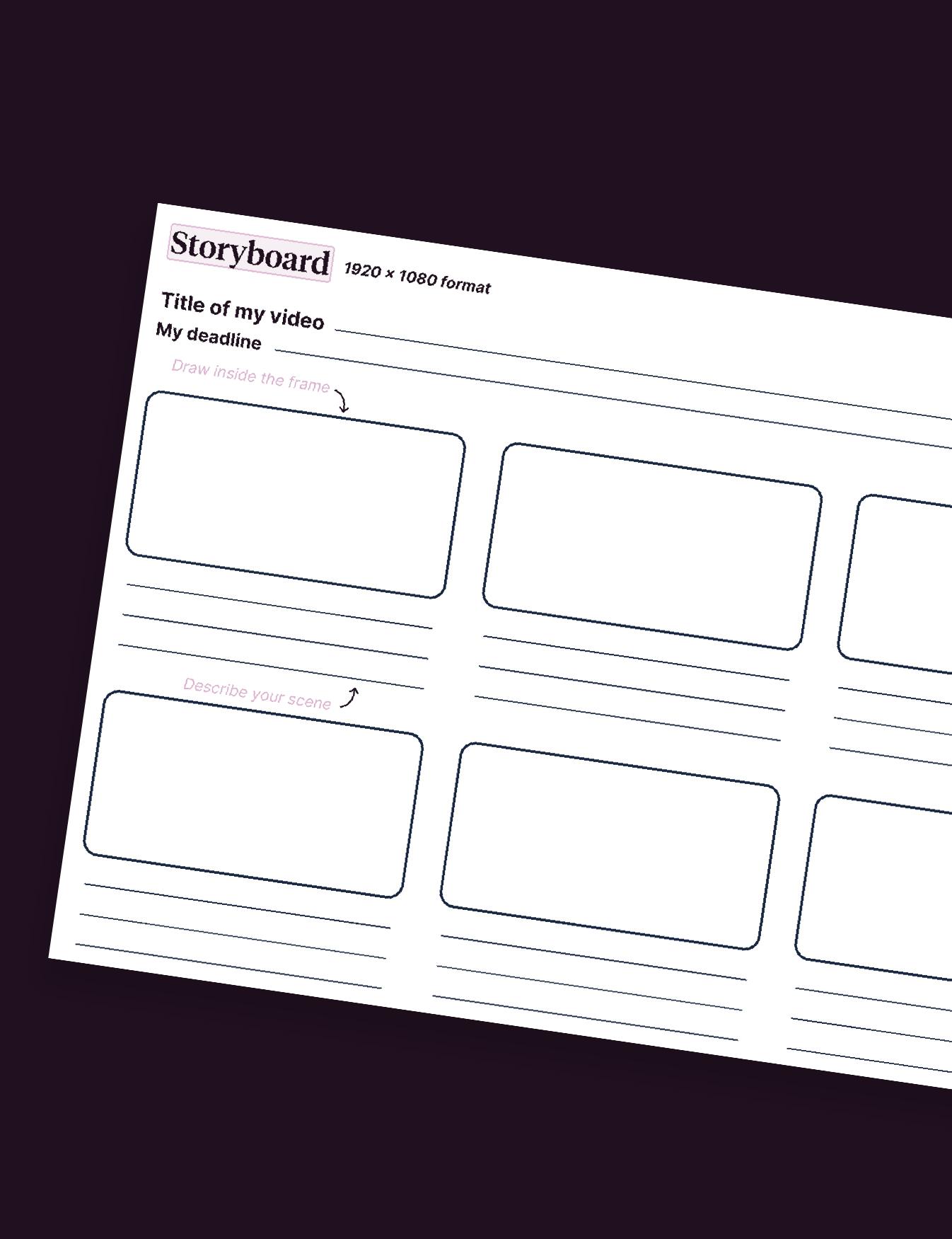
Step #3: Planning and storyboarding the video
A successful video relies on careful planning. Storyboarding is a key step that involves visualizing and organizing the elements of your video before moving on to the production phase.
- Create a script: Write a clear and concise script that incorporates your main messages, explicit calls to action (CTAs), and a balance of information and emotion.
- Define a structure: Start with a powerful introduction, develop the central content with key points, and conclude with a call to action.
- Create a storyboard: Make sketches or use digital tools to visualize each scene, including camera angles, dialogue, and transitions.
Good planning reduces surprises, optimizes resources, and ensures consistency in your message.
Step #4: Move on to the production of your video
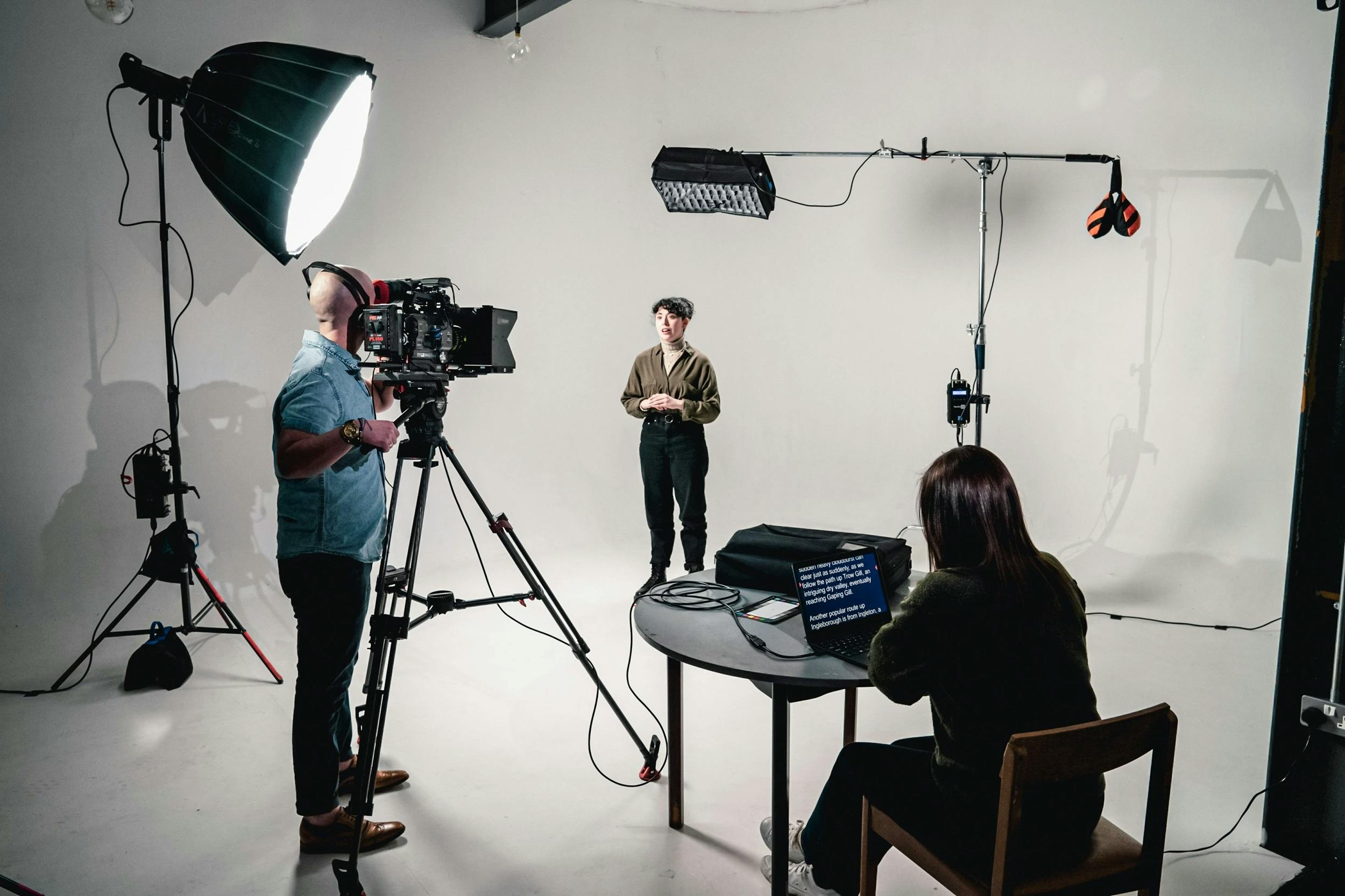
Production is the most visible step in the process to create a marketing video. It includes filming, audio recording, and gathering the necessary visual elements. Here are some tips for successful production:
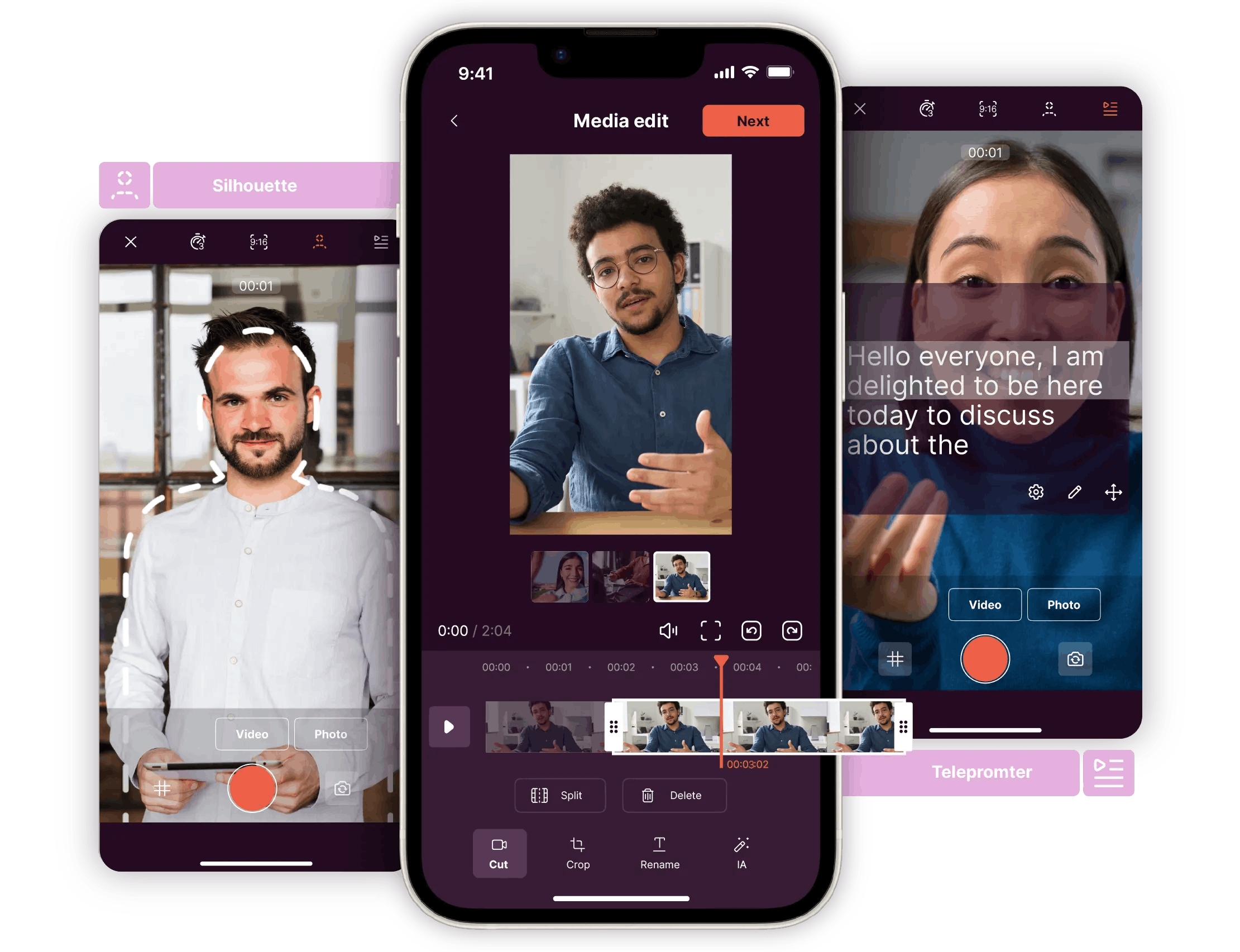
- Choose the right equipment: ****You don't need expensive professional equipment. These days, a high-quality smartphone paired with good accessories (microphone, tripod, lighting) can suffice.
- Pay attention to lighting and sound: Good lighting and clear audio quality are essential for keeping your audience's attention.
- Guide the actors: If your video includes actors or members of your team, make sure they are natural and authentic in front of the camera.
- Vary your shots: Film several versions of each scene so you have options when editing.
Invest both time and creativity to ensure the final product reflects your brand.
Step #5: Edit your video with care
Editing is when the magic happens. This is where you bring all the different elements together to create a smooth and captivating video.
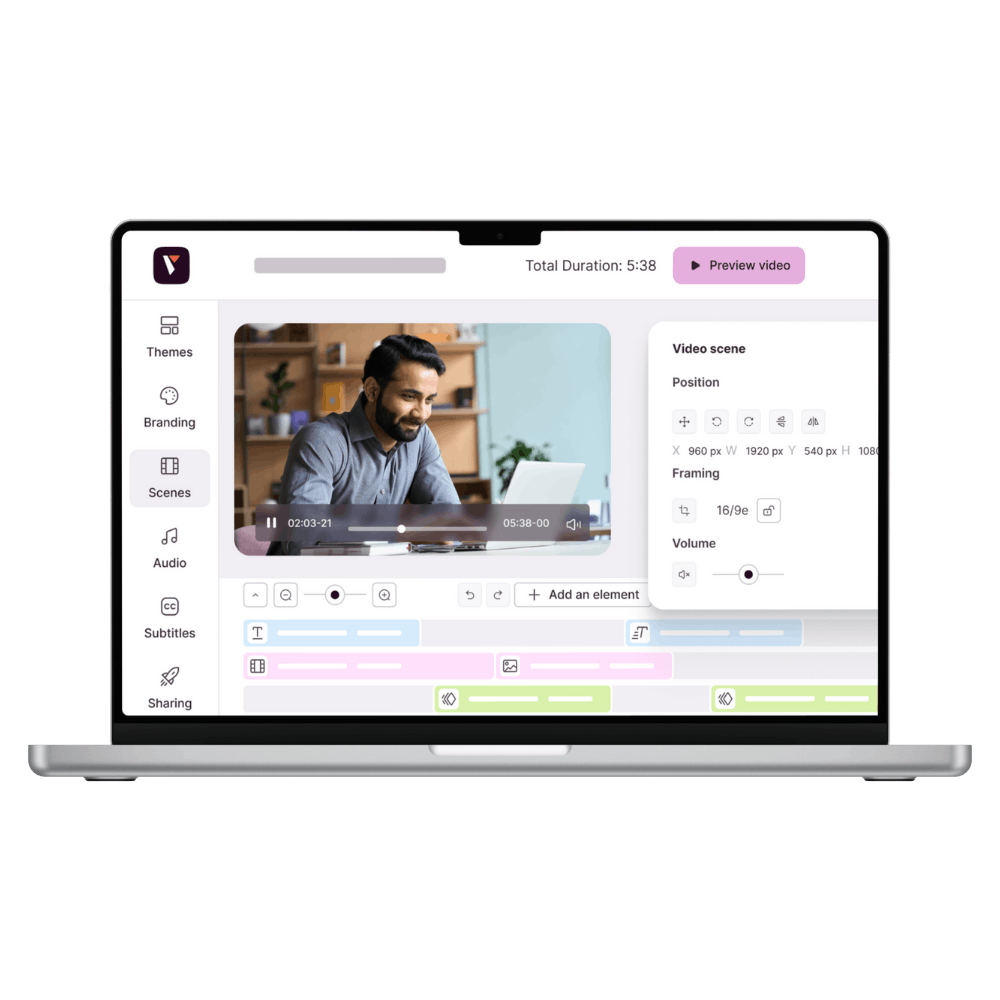
- Choose the right online video editor: Tools such as Adobe Premiere Pro, Final Cut Pro, or even free options like DaVinci Resolve can help.
- Add visual elements: Incorporate titles, graphics, and subtitles to reinforce the message and ensure accessibility.
- Use a pertinent soundtrack: Choose music or sound effects that match the tone of your video.
- Keep it concise: The ideal length for a marketing video is between 30 seconds and 2 minutes, depending on the platform and target audience.
Ensure that the final product is consistent, emotionally engaging, and aesthetically appealing.
Step #6: Share your video strategically
Even if you create a marketing video with high production quality, it will be useless if it doesn’t reach its audience. That’s why strategic distribution is crucial.
- Choose the right platforms: Determine where your audience spends the most time - YouTube, Instagram, Facebook, LinkedIn, or TikTok - and tailor your content accordingly.
- Optimize for SEO: Add relevant keywords to the title, description, and tags to improve your video's visibility.
- Create a promotion plan: Share the video via your newsletters, email campaigns, and collaborations with influencers or partners.
- Publish at the right time: Analyze your audience's habits to determine the most effective days and times to publish.
A well-executed distribution strategy will maximize the impact of your video.
Step #7: Analyze performance and adjust your strategy
Finally, when you create a marketing video, it is only successful if it achieves its goals. Analyze the results to see what worked and what could be improved.
- Use analytics tools: Platforms like YouTube Analytics, Facebook Insights, or Google Analytics offer valuable data on views, click-through rates, engagement, and conversions.
- Collect feedback: Ask your customers or team for their opinions to gain qualitative insights.
- Test and repeat: Try out different versions or variations to see what gets the best results.
An ongoing process of evaluation and improvement ensures even more impactful campaigns in the future.
Creating an impactful marketing video requires a well-structured strategy, from defining objectives to analyzing performance. By following these seven steps, you will maximize your chances of producing content that not only captures your audience's attention but also has a real impact on your business goals. With careful planning and creative execution, your marketing video will become a powerful asset in your communications arsenal.
Pitchy, the video editing platform designed for businesses, has launched a 7-day free trial for new users. With no commitment or credit card required, users can create up to 10 videos and explore the platform’s features to see how it fits their video editing needs.
Ready to create a marketing video? Contact Pitchy!
If you’re looking to create a marketing video with a lasting impact on your audience, Pitchy is the right platform for you. We give you all the tools you need to bring your marketing strategy to life. If you want to try Pitchy for free, start your 7-day free trial here, or ask for a demo to get started.

Resources
Related resources

Snack content is an entry point for your content on social media to increase brand awareness!

Unlock the power of storyboarding for better video production. Discover effective tools, free templates, and step-by-step creation tips.
Master the initial phases of a video project!